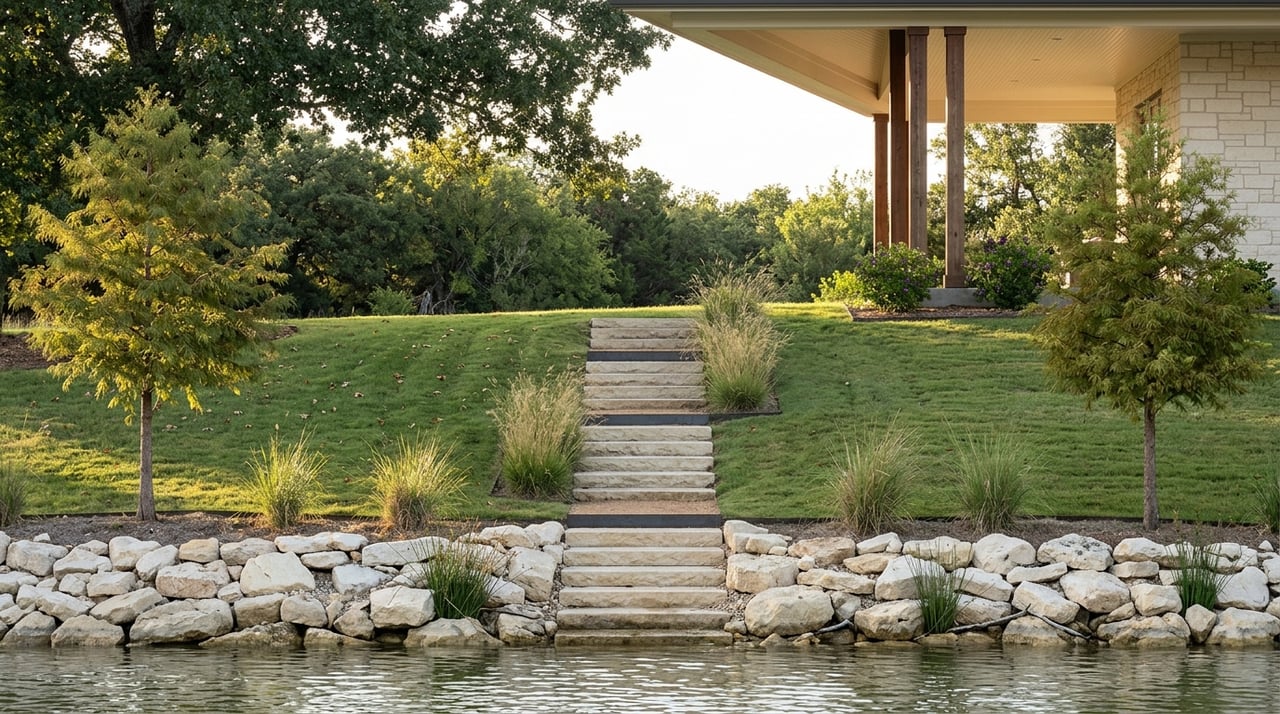
Buying acreage near Lake Texoma can feel like the best of both worlds until you realize lake-area land plays by a different set of rules. If you are dreaming about space to spread out, time on the water, and a property that fits your lifestyle, you also need to know what the land can legally and practically do. This guide walks you through the key issues that shape lake-area acreage in Grayson County, from shoreline access to floodplain review, so you can move forward with more clarity and confidence. Let’s dive in.
Why Lake Texoma Acreage Is Different
Acreage near Lake Texoma is not the same as a typical inland tract in Grayson County. The reservoir, shoreline controls, floodplain questions, and utility considerations can all affect how you use the property.
Lake Texoma was created by Denison Dam on the Red River and sits on the Texas-Oklahoma border. The project was authorized for flood control, power generation, conservation, and recreation, and the U.S. Army Corps of Engineers has operated it since the 1930s. That history still shapes how nearby land is managed today.
In simple terms, buying here is often less about the raw number of acres and more about the details behind those acres. You will want to understand buildability, access, water and septic options, and whether your lake-use plans are actually allowed.
What Draws Buyers to Texoma
Lake Texoma has strong lifestyle appeal for buyers who want land and outdoor recreation in the same place. The Corps describes it as a major recreation destination with year-round camping, boating, fishing, trails, and day-use areas, with nearly 7 million annual visitors.
For many buyers, that means acreage here can offer more than privacy and elbow room. It can also put you close to boating, fishing, hiking, and time outside on a regular basis.
Texas Parks and Wildlife notes that Texoma is one of the few freshwater lakes in the country with a self-sustaining striped bass population. If fishing matters to you, that is a big part of the area’s draw.
Nearby recreation adds to the appeal. Eisenhower State Park offers shoreline fishing, trails, a swimming cove, and boat access, while Hagerman National Wildlife Refuge provides more than 9 miles of trails and a wildlife drive along the lakeshore.
Understand the Shoreline Reality
One of the biggest mistakes buyers make is assuming waterfront or near-water acreage comes with fixed shoreline expectations. Lake Texoma is a working reservoir, and its shoreline can change.
Texas Parks and Wildlife reports that the lake level can fluctuate by about 5 to 8 feet each year. The shoreline is also irregular, with features that include rocky bluffs, sandy flats, beaches, channels, rocks, and standing timber.
That matters because your real-life water access may not look the same in every season. A property that feels close to the water one month may present differently when lake levels shift.
Dock Rights Are Not Automatic
A tract near the lake does not automatically give you the right to build or keep a dock. That is a major issue to verify early if lake access is part of your plan.
Shoreline uses around Lake Texoma are governed separately by the U.S. Army Corps of Engineers. Their shoreline management rules address private docks, mowing permits, and other uses of government property near the water.
The practical takeaway is simple: do not assume shoreline improvements are allowed just because a parcel is near the lake. If you want a dock, boathouse, or shoreline work, check the applicable maps and rules before you close.
USACE also states that work or structures in navigable waters require a federal permit. Even if a property looks ideal on paper, your intended use needs confirmation.
Grayson County Rules Still Matter
Outside of certain districts, unincorporated Grayson County does not have zoning. For some buyers, that sounds straightforward, but it does not mean anything goes.
Subdivision regulations, deed restrictions, HOA rules, and access easements can still affect what you can do with the land. A parcel’s legal and physical access can be just as important as its acreage count.
The county also states that it does not maintain individual survey records, does not issue certificates of occupancy, and does not require building permits for single-family residential structures. At the same time, it does require Development Certificates for items such as new E911 addresses, culverts, and floodplain determinations.
That mix can surprise buyers who are used to a more typical suburban process. It is one reason rural and lake-area land deserves a more careful review upfront.
Floodplain Review Comes First
If you are looking at acreage near Lake Texoma, flood risk should be one of your first checks. This is not a minor detail or something to save for later in the process.
FEMA’s Flood Map Service Center is the official source for flood hazard maps. Grayson County also states that a Floodplain Development Permit and Elevation Certificate are required for development involving Special Flood Hazard Area encroachment.
The county’s subdivision rules add another layer. They require the 100-year floodplain to be shown on plats, and some plats downstream of flood-control dams must include dam-breach analysis and finished floor elevations.
Because Lake Texoma is itself part of a flood-control project, floodplain review can carry more weight here than buyers expect. Before you fall in love with a tract, make sure you understand where building may or may not be feasible.
Septic and Water Need a Real Plan
Utilities are another area where lake-area acreage differs from many in-town properties. If a tract relies on septic and a well, you need more than a quick assumption that both will work.
Grayson County requires an OSSF permit for new or replacement septic systems. The Texas Commission on Environmental Quality also states that almost all on-site sewage facilities need a permit before construction, installation, repair, or alteration.
For water, TCEQ recommends using an accredited drinking water laboratory for well testing. In some subdivisions that rely on wells, Grayson County rules may also require an engineer’s report showing adequate groundwater supply.
In plain terms, you want answers on septic suitability and water availability before closing, not after. Those answers can affect cost, timing, and whether the property truly fits your plans.
Access and Easements Can Make or Break It
A beautiful tract loses value quickly if access is unclear or restricted. This is especially true for rural and lake-adjacent property where road frontage, easements, and entry points may not be obvious at first glance.
In Grayson County, easement review is part of smart due diligence. You will want to confirm legal access, understand any shared-drive or utility easements, and make sure the property works for how you intend to use it.
This is one of those details that sounds small until it is not. If access is limited, your building plans, financing path, or day-to-day use could all become more complicated.
Boating and Lake Conditions Matter Too
If your goal is to keep a boat nearby or spend weekends on the water, there are a few lake-specific issues worth knowing. These may not change whether you buy, but they should shape your expectations.
Texas Parks and Wildlife says zebra mussels have invaded Lake Texoma, and boats, livewells, and bait buckets must be drained before leaving the area. TPWD also notes that blue-green algae blooms can occur, so current advisories matter.
For buyers who plan to spend a lot of time on the lake, these are practical ownership and recreation considerations. They are part of understanding the full lifestyle, not just the view.
What Smart Buyers Check Before Closing
When you are comparing acreage near Lake Texoma, keep your due diligence focused on use, not just appearance. A tract may look perfect online but still have major limits.
Here is a smart early checklist:
- Confirm floodplain location and any flood-related development requirements
- Review shoreline rules if you want water access, a dock, or shoreline improvements
- Verify legal access and any recorded easements
- Check deed restrictions, HOA rules, or subdivision requirements
- Investigate septic permitting needs and site suitability
- Review water options, including well feasibility if applicable
- Study the survey and property boundaries carefully
- Match your intended use to what the land can actually support
This approach can help you avoid buying based on assumptions. It also gives you a clearer picture of cost, risk, and long-term fit.
Why Local Land Guidance Helps
Texoma acreage often has more moving parts than standard residential property. That does not mean it is harder in a bad way. It just means you benefit from a grounded process and the right questions early.
Texas Homes & Land is built around North Texas land, acreage, ranch, and rural-property transactions. That kind of experience matters when a deal involves access questions, utility unknowns, floodplain concerns, or a property that looks simple until you dig deeper.
When you are buying around Lake Texoma, practical guidance can save time and help you focus on tracts that truly fit your goals. The best outcome is not just finding acreage. It is finding acreage that works.
If you are thinking about buying lake-area land in Grayson County, Texas Homes & Lands can help you sort through the details and move forward with confidence.
FAQs
What makes Lake Texoma acreage different from inland acreage in Grayson County?
- Lake Texoma acreage often involves added review for shoreline rules, floodplain concerns, septic, water supply, easements, and access to the reservoir.
Can you build a private dock on Lake Texoma acreage in Grayson County?
- Not automatically. Shoreline uses are governed by the U.S. Army Corps of Engineers, and dock or shoreline plans need to be checked against their rules and permitting requirements.
Do you need to check floodplain maps before buying Lake Texoma land?
- Yes. Flood risk is one of the first things to review because Grayson County requires permits and other documentation for development involving flood hazard areas.
Does Grayson County require building permits for single-family homes on acreage?
- Grayson County states that it does not require building permits for single-family residential structures in unincorporated areas, but other approvals such as Development Certificates may still apply.
What should you verify about septic and water on Grayson County acreage?
- You should confirm septic permitting needs, site suitability for an OSSF, and water availability, including well testing and any subdivision-related groundwater requirements if the property relies on wells.
Is waterfront acreage at Lake Texoma always close to usable shoreline?
- Not necessarily. Lake levels can fluctuate by 5 to 8 feet annually, and the shoreline is irregular, so actual water access and shoreline conditions can vary over time.
What outdoor activities attract buyers to the Lake Texoma area?
- Many buyers are drawn to boating, fishing, camping, trails, shoreline recreation, and nearby destinations like Eisenhower State Park and Hagerman National Wildlife Refuge.