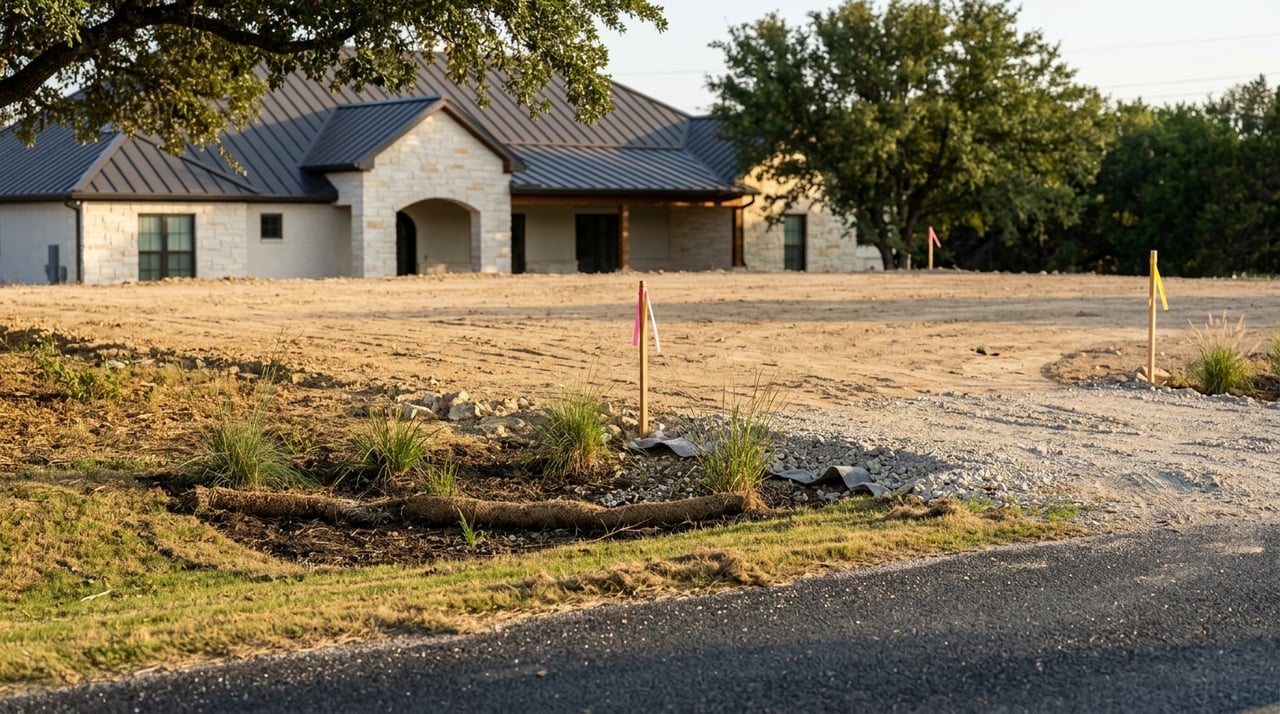
Thinking about buying or selling acreage in Denton County because it looks like a future development play? You are not alone. With growth pushing through major corridors and more buyers looking beyond standard suburban lots, raw land can look full of promise, but not every tract is as buildable or as simple as it seems. This guide will help you evaluate what really matters, from jurisdiction and access to utilities, drainage, and approval paths, so you can make a more informed decision. Let’s dive in.
Why Denton County Acreage Gets Attention
Denton County has been growing quickly. The county’s population estimate reached 1,069,346 in July 2025, up from 906,422 at the 2020 Census, and county officials have pointed to growth along the U.S. 380 corridor and continued development along I-35E.
That kind of growth naturally puts more attention on acreage. Buyers, sellers, and investors often look at land near major roadways and urban edges and wonder whether a tract could support future subdivision, commercial use, or a more strategic resale.
Still, development potential is not based on location alone. In Denton County, the first screen is usually jurisdiction, then access, then utilities and drainage, followed by the cost and timing of approvals.
Start With Jurisdiction First
One of the biggest mistakes you can make is assuming the same rules apply everywhere. Before you look at lot yield, layout ideas, or resale value, you need to know whether the tract sits in unincorporated Denton County, inside city limits, or in a city’s ETJ.
That single detail can shape the approval path. Denton County’s subdivision rules say that if land is in a city’s ETJ, the plat must be approved by that city’s governing body.
This is why an acreage tract on the edge of a growing area can become more complicated than expected. As areas urbanize, planning, traffic, open-space concerns, and environmental considerations can all play a larger role in what happens next.
Why ETJ Status Matters
ETJ stands for extraterritorial jurisdiction. In practical terms, it means a city may not fully annex the property today, but it can still have a say in platting and development-related review.
If you skip this step, you could spend time evaluating a tract under county assumptions when city review may also apply. That can affect timing, design, engineering, and overall feasibility.
Access Can Make or Break a Tract
Acreage without practical legal access can be far less useful than it looks on paper. You want to know not just whether the property touches a road, but what kind of road it fronts and what approvals may be required for a new drive.
In unincorporated Denton County, a new drive on a county-maintained road requires a culvert permit. If the parcel fronts a state highway, TxDOT access-driveway rules apply, and driveway geometry, drainage impacts, utility conflicts, and environmental requirements may all need coordination.
That means frontage is only part of the story. A tract with visible road exposure may still face access design limits, added cost, or delays that change the numbers.
Questions to Ask About Access
- Is there documented legal access?
- Does the tract front a county-maintained road or a state highway?
- Will a new driveway need county or TxDOT coordination?
- Could drainage or utility conflicts affect driveway placement?
Utilities and Septic Need Early Review
Utilities are one of the fastest ways to separate a promising tract from a difficult one. For subdivision work in Denton County, the plat checklist requires utility-provider information and either signatures or a will-serve letter showing service can be provided before Commissioners Court review.
If water or sewer is not readily available, the next question becomes whether the site can rely on an on-site sewage facility, also called an OSSF or septic system. Denton County Public Health reviews OSSF designs, issues construction permits, and conducts final inspections in unincorporated areas.
This matters because not every tract has the same septic flexibility. If sewer service is not available, a key feasibility question is whether an OSSF can actually fit and function on the property.
Utility Reality Check
When you are evaluating acreage, it helps to confirm:
- Whether water service is available
- Whether sewer service is available
- Whether utility providers are willing and able to serve the tract
- Whether septic layout could limit building areas or lot configuration
County guidance also notes that OSSF systems are not city sewer systems and that structures should not be built over the treatment works or disposal field. That can affect how much of a site is truly usable.
Floodplain and Drainage Deserve Serious Attention
If a tract touches a creek, floodplain corridor, or low-lying drainage area, do not treat that as a minor detail. Denton County requires a development permit for development in unincorporated areas, including grading, excavation, filling, mining, and other land disturbance.
If the site is in a FEMA Special Flood Hazard Area, the county requires finished-floor elevation certification by a Texas Registered Professional Surveyor, Engineer, or Architect. The county also says it is using updated floodplain maps for some southwest Denton County studies while FEMA releases regulatory maps.
In other words, floodplain review is not always as simple as pulling one old map and moving on. Drainage conditions, updated studies, and future construction limits can all change what is possible on a tract.
Why Drainage Affects Development Potential
Drainage can influence:
- Building placement
- Road and driveway design
- Septic placement
- Fill and grading cost
- Stormwater compliance timing
Larger projects can also trigger stormwater requirements early. TCEQ’s Construction General Permit applies when construction disturbs one or more acres of soil.
Some Areas Have Extra Constraints
Not all Denton County acreage is regulated the same way. Near Lake Ray Roberts, the county’s land-use ordinance applies to land within a 5,000-foot band from the lake take line outside corporate limits.
According to the county, that ordinance is intended to avoid overcrowding, reduce roadway congestion, and help provide for public needs such as parks, schools, sewage, transportation, and water. For a buyer or seller, the takeaway is simple: proximity to a lake, creek system, greenbelt corridor, or reservoir area can mean more review and more limitations.
The Denton County Greenbelt Plan also describes the county as rapidly urbanizing and notes the importance of preserving stream corridors and adjacent natural areas around Lewisville, Ray Roberts, Grapevine, and future Lake Ralph Hall. If a tract sits near protected corridors or watershed-sensitive areas, you may need to be more cautious about assumptions.
Understand the Approval Path Early
If the tract is in unincorporated Denton County, several different county requirements may come into play. Denton County’s development-services process notes that a development permit is required for development, commercial work may need a fire marshal permit, new drives on county roads need a culvert permit, and OSSF permits may also be needed.
If the land must be subdivided, the county’s process begins with a preliminary plat and engineering review. From there, it can move through Commissioners Court action, construction of improvements, final plat review, and recordation.
That timeline can be manageable for the right tract, but it is rarely instant. The more moving parts a property has, the more important it becomes to understand likely timeframes and costs before you commit.
Use GIS for a First-Pass Screen
Before spending heavily on deeper due diligence, Denton County’s GIS tools can help with an initial review. The county maps FEMA floodplain areas, political and municipal boundaries, road improvement projects, and transportation networks.
That makes GIS a practical first step for checking whether a tract is in city limits, in an ETJ, in a floodplain corridor, or near a planned road project. It is not a substitute for professional review, but it can help you spot obvious issues earlier.
A Simple Screening Checklist
If you are trying to judge whether Denton County acreage may have development potential, start with these questions:
- Is the property in unincorporated Denton County, inside city limits, or in a city’s ETJ?
- Does it have permitted legal access?
- Is the frontage on a county road or a state highway?
- Are water and sewer available?
- If not, can an OSSF work on the tract?
- Does the property touch a creek, floodplain, greenbelt corridor, or Lake Ray Roberts jurisdiction area?
- Will construction disturb enough soil to trigger stormwater requirements?
- Are planned road projects or corridor changes likely to help or complicate the tract over time?
If several of those answers are unclear, that is your signal to slow down and investigate further.
What Buyers and Sellers Should Keep in Mind
If you are a buyer, the goal is not just to find acreage with a good location. The goal is to find acreage that fits your intended use, budget, and timeline once real-world constraints are factored in.
If you are a seller, understanding these issues can help you position the property more accurately. A tract with clear access, utility support, and fewer drainage concerns may appeal to a wider pool of serious buyers than one with unanswered feasibility questions.
In both cases, good guidance matters. Land can carry real opportunity, but it also comes with details that do not show up in a quick online search or a simple drive-by.
Why Local Land Knowledge Matters
In a fast-moving county like Denton, acreage is not a standard product. Two properties with similar size and similar road visibility can have very different development outlooks based on ETJ status, floodplain conditions, septic feasibility, or access design.
That is why local land experience can make such a difference. When you understand how Denton County review works and where common red flags tend to show up, you can ask better questions early and avoid costly assumptions later.
Whether you are evaluating a future homesite, investment tract, development parcel, or family acreage you may want to sell, a clear process helps you move with more confidence. If you want practical guidance on Denton County land, acreage homes, or development-minded property decisions, connect with Texas Homes & Lands.
FAQs
What should you check first when evaluating Denton County acreage for development?
- Start with jurisdiction. You need to know whether the tract is in unincorporated Denton County, inside city limits, or in a city’s ETJ before you can judge the likely approval path.
Why does road frontage matter for Denton County land?
- Road frontage affects access, driveway permitting, and site design. In unincorporated areas, a new drive on a county-maintained road requires a culvert permit, and state-highway frontage may involve TxDOT access rules.
How do utilities affect development potential on Denton County acreage?
- Utility availability can strongly affect feasibility. For subdivision review, Denton County requires utility-provider information and service confirmation, and if sewer is unavailable, septic suitability becomes a key issue.
What floodplain issues should you review on Denton County acreage?
- You should check whether the tract is in a FEMA Special Flood Hazard Area or other mapped floodplain area, because floodplain development can require added permits, certifications, and design limitations.
Can land near Lake Ray Roberts have extra rules in Denton County?
- Yes. Denton County has a land-use ordinance that applies to certain land within a 5,000-foot band from the lake take line outside corporate limits, so location near the lake can add another layer of review.
When should you bring in professionals for Denton County land due diligence?
- If access, utilities, septic feasibility, floodplain limits, ETJ status, or subdivision requirements are unclear, it is wise to involve qualified professionals early before assuming the tract has development potential.