Thinking about buying recreational land in Fannin County? A pretty view or a low price can catch your eye fast, but the real value of a tract comes down to how well it fits the way you want to use it. If you want a hunting place, weekend retreat, future cabin site, or long-term hold, knowing what to evaluate up front can save you time, money, and frustration. Let’s dive in.
Why Fannin County draws land buyers
Fannin County stands out because it is still a low-density rural market with room for a wide range of land uses. The U.S. Census Bureau estimates 39,265 residents in 2025 across 890.84 square miles of land, and the county had about 40 people per square mile in 2020. That lower-density setting helps explain why recreational acreage remains an important part of the local land market.
The county also benefits from major outdoor recreation anchors. Bois d’Arc Lake opened for recreation on May 17, 2024, and public access areas include restrooms, parking, picnic areas, and camping, with three public boat ramps listed by Texas Parks and Wildlife as free to launch and open year-round. Caddo-LBJ National Grasslands adds another strong draw, with hiking, camping, fishing, hunting, horseback riding, mountain biking, wildlife viewing, and photography available in the broader area.
Start with access first
If a tract is hard to reach legally or physically, everything else becomes harder. In Fannin County, subdivision regulations require lots to have direct access to a county street or road, or to a private or public road built to county standards with the required dedicated right of way. That makes legal and practical access one of the first items you should confirm.
You will also want to look beyond the listing description and ask how that access works in the real world. Is there road frontage, or are you depending on a recorded easement? Is the road usable in wet weather, and does the route support the type of use you have in mind for equipment, trailers, or regular weekend trips?
The county also notes that it does not provide drainage maintenance except where needed to protect the street or road system. That matters because a road may exist, but drainage conditions can still affect how dependable that access feels over time. For many recreational buyers, good access is the difference between a tract you enjoy and one you avoid.
Check floodplain and buildable area
Not all acreage is equally usable. A tract can look large on paper and still offer much less functional land if floodplain, drainage features, or easements take up key sections of the property.
Fannin County’s subdivision checklist calls for items such as a topographic map, 100-year floodplain map, soil survey, drainage plan, water-well locations, easements, and utility letters. The county also states that floodplain acreage does not count toward net lot area. If your goal includes building a cabin, placing improvements, or preserving future flexibility, you need to know where the actual usable area sits.
This is especially important when you compare one tract against another. A smaller parcel with a clear build site outside the floodplain can be more functional than a larger tract with major limitations. That kind of comparison often tells you more than raw acreage alone.
Understand soil, terrain, and drainage
The land itself needs to support your intended use. Fannin CAD’s 2024 agricultural and wildlife guidelines note that county soils are generally sandy in the north and clay-based in much of the south, and that terrain, soil type, and water can affect degree-of-intensity standards.
For a buyer, that means the county is not one-size-fits-all. Sandy soils, clay soils, slopes, low areas, and drainage paths can all change how a property performs for access, building, wildlife management, or general recreation. A tract that works well for weekend camping may not be as simple for a future homesite or other improvements.
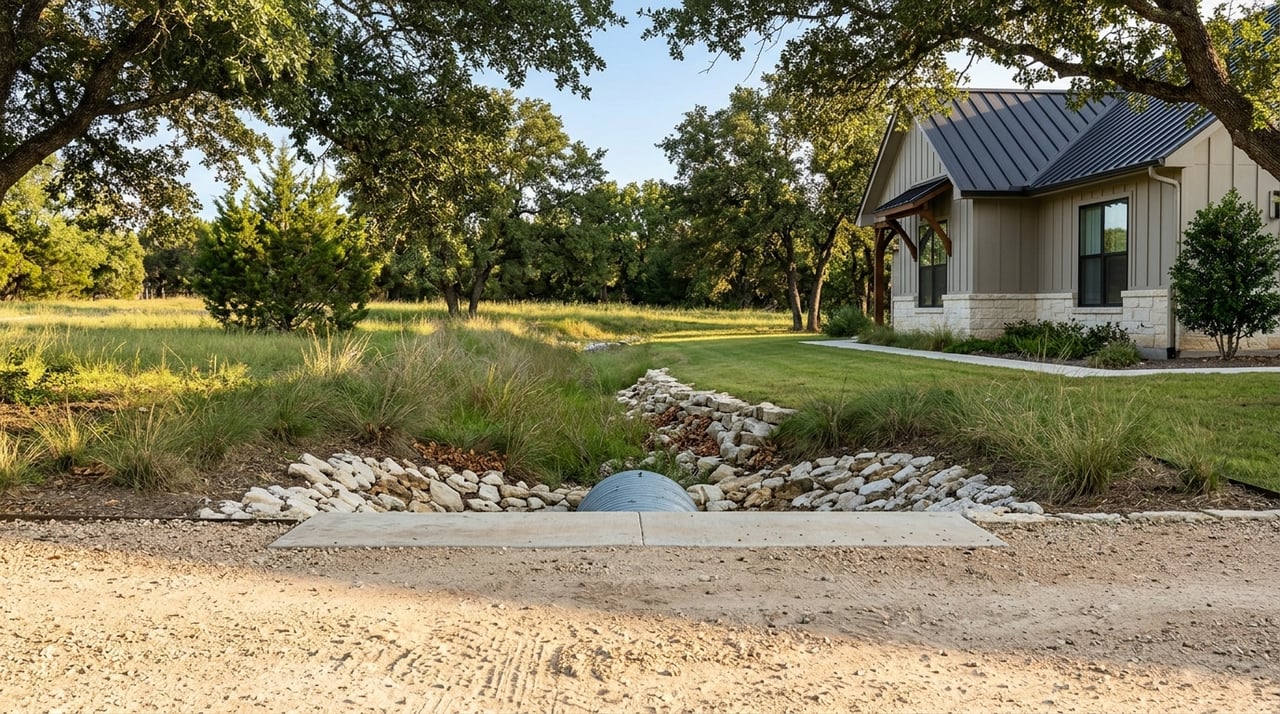
Drainage also matters more than many buyers expect. Since the county checklist asks for a drainage plan in subdivision review, it is smart to evaluate drainage patterns early even if you are not subdividing right away. Water movement can affect road stability, usable acreage, and long-term maintenance.
Look closely at water access and shoreline rules
Being near water can add major appeal, but proximity does not always equal use rights. Around Bois d’Arc Lake, the North Texas Municipal Water District controls the shoreline and requires adjacent owners to obtain written authorization for shoreline use through its Shoreline Management Plan.
That means a tract near the lake may still come with limits on what you can do. Some shoreline classes can support private docks or vegetation work, while environmentally sensitive areas may allow no lease or use agreements. In other words, a property can be close to the water and still not offer the kind of private shoreline access a buyer expects.
If you are shopping near Bois d’Arc Lake, make sure you separate three things: lake proximity, public access, and private shoreline rights. Public ramps are free and open all year, which is a real advantage for recreation. But private improvements such as docks, clearing, or certain shoreline uses may require approvals or may not be allowed in some locations.
Verify septic and well feasibility
Many recreational tracts rely on private systems, so water and wastewater planning should be part of your early due diligence. In Fannin County, the Environmental Development office handles on-site sewage facility permits, and its septic instructions require a site evaluation, 911 address, design and supporting documents, a copy of the warranty deed, permit review before construction, and inspection before the system is covered.
Lot size rules matter here too. The county’s septic instructions say the minimum lot size is 1 acre, and the subdivision regulations state that lots using individual OSSF systems need at least 1 acre, or 2 acres when both a well and OSSF are used. Drainage easements and floodplains are excluded from net lot area, so not every acre on paper counts toward these requirements.
Groundwater is a separate question from lake access. The Red River Groundwater Conservation District has regulatory authority over groundwater resources in Fannin County, and non-exempt wells are subject to permitting, metering, and reporting. If your plans depend on drilling a future well, that district oversight should be part of your evaluation.
Match the tract to your intended use
The best recreational tract for you depends on what you actually want to do there. A hunting setup, a family weekend getaway, and a future cabin site can each point you toward different priorities.
For hunting use
Start with permission and game-management practicality. Texas Parks and Wildlife states that a person may not hunt on privately owned land without the owner’s permission, so property boundaries and access rights matter from day one.
It also helps to understand the area’s broader outdoor appeal. The Caddo National Grasslands Wildlife Management Area in Fannin County includes the Bois d’ Arc Creek and Ladonia units, with public hunting managed through the public-hunting program. That nearby public access helps reinforce the county’s recreation profile and can influence buyer interest in private land.
For weekend retreats
A good weekend property should be easy to use, not just nice to look at. Compare road access, septic feasibility, water source, flood risk, and whether any nearby lake or shoreline rights are actually usable.
A tract with year-round usability often delivers a better ownership experience than a larger property with unresolved questions. If you expect to camp, place an RV, or build a small cabin later, county rules and lake-specific regulations can shape what is realistic.
For future resale
You cannot promise appreciation, but you can evaluate marketability. Based on the county’s road, floodplain, septic, and shoreline rules, tracts with clean access, a documented build site outside the floodplain, realistic utility paths, and clear answers on permitted use tend to be easier for future buyers to understand.
That matters because uncertainty can narrow your buyer pool later. Clear due diligence today can support a smoother sale down the road.
Review tax status before you buy
If a property is being presented as agricultural or wildlife land, do not stop at the current tax bill. The Texas Comptroller states that wildlife management can qualify as agricultural use only when the land was previously qualified open-space land or timberland and is actively managed through at least three approved wildlife practices.
The Comptroller also says that a change from agricultural use to non-agricultural use can trigger rollback tax for the previous three years, plus interest in some cases. For a buyer, that means tax treatment is not just a nice bonus. It is a detail that can affect your ownership costs if the land use changes.
Questions to ask before you make an offer
A recreational tract can be a great fit, but only when the facts support your plans. Before you move forward, make sure you can get clear answers to the basics.
- Does the tract have legal road frontage or a recorded access easement?
- Is any part of the property in floodplain, floodway, or NTMWD shoreline territory?
- Can the tract support a septic system and, if needed, a well?
- Would agricultural or wildlife valuation remain in place after purchase?
- If you want to camp, place an RV, build a cabin, or add a dock, what approvals are required?
- If you ever subdivide, what road, drainage, and platting standards would apply?
Why local land guidance matters
Recreational land can look simple at first glance, but in practice it often involves access rules, soil questions, water issues, septic review, and use restrictions that do not show up in a quick online search. In a market like Fannin County, those details shape whether a property truly fits your goals.
That is where local land experience can make a real difference. Texas Homes & Land is built around North Texas acreage, ranch, and land transactions, with the kind of practical guidance buyers need when the questions go beyond square footage and finish-outs. If you are comparing recreational land in Fannin County and want a clear, grounded look at what a tract can actually do, reach out to Texas Homes & Lands.
FAQs
What should you check first on recreational land in Fannin County?
- Start with legal and practical access, then review floodplain, septic feasibility, water options, and any shoreline or use restrictions that affect your plans.
Can you build on any recreational tract in Fannin County?
- Not automatically. Buildability can depend on access, floodplain location, net lot area, septic requirements, drainage, and other county standards.
Does waterfront land on Bois d’Arc Lake include private shoreline rights?
- Not necessarily. NTMWD controls the shoreline, and adjacent owners must obtain written authorization for shoreline use under the Shoreline Management Plan.
Do you need to evaluate well rules for land in Fannin County?
- Yes. If you may rely on groundwater, the Red River Groundwater Conservation District’s permitting, metering, and reporting rules can be part of your due diligence.
Can recreational land in Fannin County keep an agricultural or wildlife valuation?
- Possibly, but you should verify the tax history and current qualification standards because changes in use can affect eligibility and may trigger rollback tax in some cases.