Buying a horse property in Cooke County can feel exciting right up until the details start piling up. You may love the acreage, the barn, or the view, but a horse property only works if the land, layout, and county rules support how you plan to use it. This guide will help you look past the listing photos and focus on the features that matter most in Cooke County. Let’s dive in.
Start With County-Specific Due Diligence
Cooke County is largely rural, covering about 900 square miles with roughly 40,000 residents. That rural setting is part of the appeal, but it also means each tract needs careful review before you buy.
For most horse-property buyers, the question is not simply whether horses are allowed. The better question is which county rules apply to that specific parcel, including floodplain rules, septic requirements, subdivision regulations, 911 addressing, and any Lake Ray Roberts planning and zoning overlays.
Check Fencing for a Closed-Range County
One of the first things to inspect is the fencing. Cooke County operates under a closed-range stock law, and Texas law also says a person who controls a horse cannot knowingly allow it to roam unattended on a highway right-of-way.
That makes secure fencing and dependable gates essential. Look closely at corners, low spots, sagging lines, and gate latches. A pretty entrance does not help much if the perimeter is weak where a horse is most likely to test it.
What safer horse fencing should do
A horse fence should prioritize safety, visibility, and long-term maintenance. Guidance in the research recommends a permanent perimeter fence that is generally about 5 feet tall, without sharp edges or projections, and no barbed wire on the main horse perimeter.
A mixed fencing plan often makes sense. Many horse properties work best with a stronger perimeter fence and simpler internal cross-fencing for rotation and turnout management.
Evaluate the Land, Not Just the Acre Count
A horse property is more than a number on paper. Two 10-acre tracts can function very differently depending on soil, slope, drainage, and how the land is laid out.
A useful rule of thumb is around 2 acres per 1,000-pound horse if you expect the pasture to provide most of the grazing. In some well-managed situations, about 1 acre per horse may work for exercise and supplemental grazing, while weaker ground may need up to 5 acres per horse.
Look for usable ground
The best horse ground is usually relatively flat and avoids wet areas, steep slopes, creeks, muddy low spots, wetlands, and heavy wooded sections that limit safe turnout. If a large share of the tract is not truly usable, the posted acreage may overstate what the property can support.
As you walk the land, think about where horses will actually move, graze, and rest. A property with less acreage but better layout can be more useful than a larger tract with major problem areas.
Make sure there is room for a dry lot
A dry lot, also called a sacrifice paddock, is one of the most practical features on a horse property. It gives you a place for turnout during wet weather and lets you rest pasture when needed.
Research guidance suggests at least 400 square feet per horse for this area. If the property has no obvious space for a dry lot, you may end up fighting mud and overgrazing sooner than expected.
Study the Pasture Layout
Good pasture layout can save you time, money, and frustration. You want a setup that makes it easier to rotate horses, mow, drag manure, and move equipment without creating awkward bottlenecks.
Pay attention to where gates sit and whether they are wide enough for a tractor or trailer. Gates placed where water collects can become muddy trouble spots, while well-placed gates can make daily chores much easier.
Rotation matters
Cross-fencing can help you rest sections of pasture and manage grazing more effectively. Electric wire is often used for internal subdivisions because it can be economical and practical.
Even if the current owner uses the land one way, consider whether the layout matches your own routine. Feed access, equipment flow, and turnout patterns all affect how well the property will work once you move in.
Inspect Barns and Stalls With a Critical Eye
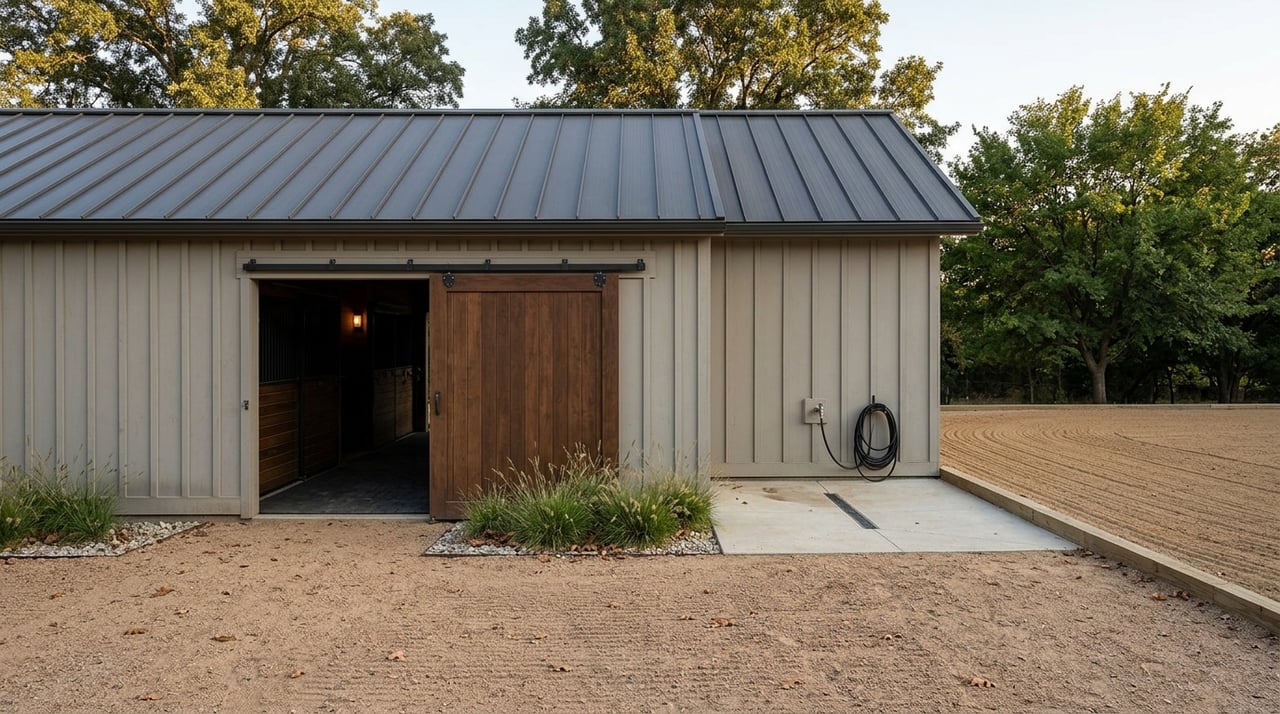
Barns can be a major selling point, but they should be judged by function, not charm alone. A beautiful barn that lacks ventilation, safe wiring, or proper stall sizing may need costly updates.
For many adult horses, a 12-by-12 stall is the standard recommendation. A 10-by-10 stall is a common minimum for light horses, but 12-by-12 or larger is generally preferred.
What to check inside the barn
Look for:
- Adequate ceiling height
- Fresh air and ventilation
- Safe electrical wiring
- Durable stall surfaces
- Walls and fixtures free of dangerous projections
These details affect horse comfort and safety every day. They are also much harder to fix after closing than cosmetic issues.
Do not ignore drainage
Stable drainage is easy to miss during a quick tour. Stall floors need a way to handle moisture, and sloped floors or drainage channels can help, especially if stalls are washed down.
When you walk the barn, notice odors, damp spots, and worn flooring. Floor condition matters just as much as stall count.
Look Beyond Arena Size
If the property includes an arena, resist the urge to focus only on dimensions. A useful arena depends more on base, drainage, and footing than on a single ideal size.
Research shows that successful riding surfaces rely on a sound base and sub-base. Footing should stay cushioned, supportive, and manageable over time, and it may need periodic amendment or replacement.
Arena questions worth asking
As you review an arena, ask yourself:
- Does the footing look even and free from holes or ruts?
- Is there visible drainage planning?
- Does the base appear stable?
- Will the surface be realistic to maintain?
A large arena with poor footing can become an expensive project. A simpler arena with a good base may serve you far better.
Prioritize Water, Shade, and Airflow
In North Texas, hot weather planning matters. Horses need free access to clean water, along with shade and airflow during hotter periods.
That means features like trees, loafing sheds, open barn design, fans, and well-placed water troughs should be treated as practical assets. They are not just nice extras for comfort.
Poor ventilation and direct sun exposure can increase overheating risk. As you tour the property, think about how the setup would function during a long summer stretch, not just on a mild showing day.
Confirm Septic, Floodplain, and Buildability
Many rural properties in Cooke County rely on septic systems rather than sewer. The county requires a current 911 rural address and property ID before an on-site sewage facility permit is issued, and septic design must be based on a site evaluation that reflects local conditions.
This becomes especially important if you are buying raw land or planning to add improvements. What you hope to build and what the tract can support are not always the same thing.
Septic acreage near Lake Ray Roberts
Cooke County's permit information says that outside the Lake Ray Roberts planning area, rural property generally needs at least one acre for septic permitting unless grandfathered. Within the Lake Ray Roberts zoning area, minimum acreage can increase to 1.5 acres in the 2,500-to-5,000-foot jurisdiction and 2.5 acres inside the 2,499-foot zone to the take line, unless grandfathered.
If you are shopping near the lake, this is a major detail to verify early. It can directly affect whether a tract works for your plans.
Floodplain can limit improvements
If a property is near a creek or low area, check floodplain status carefully. Cooke County has a floodplain development permit process, and work in the 1 percent annual chance floodplain requires professional engineering documentation.
A scenic low area may look attractive, but floodplain placement can change where you can build, expand, or add horse improvements. Always review this before you assume a site is ready for a barn, arena, or home addition.
Think Ahead About Access and Emergency Reach
Access is easy to overlook when a property shows well. For a horse property, you should think through trailer turns, road approach, gate width, surface condition, and how practical the drive will be in wet weather.
Because Cooke County is largely rural and emergency services cover a wide area, access matters for more than convenience. It can affect daily hauling, deliveries, and how quickly help can reach the property if needed.
Ask About Future Plans for the Tract
If you may want to split the property later, do not assume that will be simple. Cooke County says subdivision applications are filed with the Subdivision and Development Department and reviewed by the Rural Septic Department and Commissioners Court.
That means future lot splits or tract changes should be checked before closing. A property that works well for your current use may not automatically fit a later resale or division plan.
Do Not Assume It Qualifies for Ag Appraisal
Many buyers hear "horse property" and assume the land qualifies for agricultural appraisal. In Texas, that is not automatic.
The Texas Comptroller says qualified agricultural land is appraised based on productivity value rather than market value, and the land must be currently devoted principally to agricultural use to the degree of intensity generally accepted in the area. Land used directly for raising, breeding, and supporting horses can qualify, but land used mainly for pleasure riding does not.
Why this matters financially
If a property has an agricultural appraisal, confirm the current use and whether your planned use would continue to qualify. If the use changes, special appraisal can trigger rollback tax and interest.
This is one of the easiest places for buyers to make assumptions that later become expensive. It is worth verifying with care during due diligence.
A Smart Buyer’s Horse Property Checklist
Before you move forward on a Cooke County horse property, make sure you can answer these questions clearly:
- Is the fencing strong and appropriate for a closed-range county?
- Are there weak corners, low spots, or poor gates?
- Is the usable pasture mostly flat and not overly wet or steep?
- Is there space for a dry lot or sacrifice paddock?
- Does the pasture layout support rotation and equipment access?
- Are the barn and stalls sized, ventilated, and wired safely?
- Do the stalls and barn floors drain properly?
- Does the arena have a solid base, workable drainage, and maintainable footing?
- Are water, shade, and airflow adequate for hot weather?
- Is the tract in a floodplain or Lake Ray Roberts overlay area?
- Will septic rules affect what you can build?
- If relevant, does the property actually qualify for agricultural appraisal?
The right horse property is not always the one with the fanciest barn or the most acres. In Cooke County, the best fit is usually the one where the land, infrastructure, and county requirements all line up with how you plan to live and care for your horses.
If you want help sorting through acreage, horse-property features, and the land details that matter in North Texas, Texas Homes & Lands is here to help.
FAQs
What should you check first on a Cooke County horse property?
- Start with parcel-specific due diligence, including fencing, septic, floodplain status, access, and any county overlays that may affect the tract.
How many acres do you need per horse on a Cooke County property?
- A common rule of thumb is about 2 acres per 1,000-pound horse if pasture provides most grazing, though well-managed land may need less and weaker ground may need more.
Why is fencing so important on a Cooke County horse property?
- Cooke County is a closed-range county, so horses must be securely contained, making strong perimeter fencing and reliable gates essential.
What makes a barn functional for horses on a Cooke County property?
- Look for appropriate stall size, good ventilation, safe electrical wiring, durable surfaces, and drainage that can handle daily use.
How can septic rules affect a horse property near Lake Ray Roberts?
- Minimum acreage for septic permitting can increase in the Lake Ray Roberts planning area, so buyers should confirm whether the tract meets current permit standards.
Does every Cooke County horse property qualify for agricultural appraisal?
- No. Land used directly for raising, breeding, and supporting horses may qualify, but land used mainly for pleasure riding does not automatically qualify.